Thimphu
Bhutan's capital — a valley city of red-and-gold architecture, weekend markets, and the giant Buddha Dordenma watching over it all.
Overview
Bhutan's capital and largest city, yet still a place without a single traffic light — a white-gloved officer directs the main intersection by hand. Every building, from government offices to petrol stations, follows traditional Bhutanese architecture by law, giving Thimphu a cohesive, low-rise skyline set against pine-covered ridges. It's the seat of government and the monastic body alike, and the best place to see how Bhutan balances modern life with its Buddhist heritage.
Highlights
- Tashichho Dzong, the fortress-monastery seat of Bhutan's government and central monk body
- The 51.5-metre Buddha Dordenma statue watching over the valley
- Weekend crowds and fresh produce at the Centenary Farmers Market
- Traditional arts kept alive at the National Institute for Zorig Chusum
- A cityscape where every building — banks included — follows traditional design
Things to Do
- Watch the sunset flag-lowering ceremony at Tashichho Dzong
- Browse handwoven textiles and crafts along Norzin Lam
- Take a short hike up to the Buddha Dordenma viewpoint
- Watch a friendly game of traditional archery, Bhutan's national sport
- Visit a thangka painting or woodcarving workshop
Popular Places
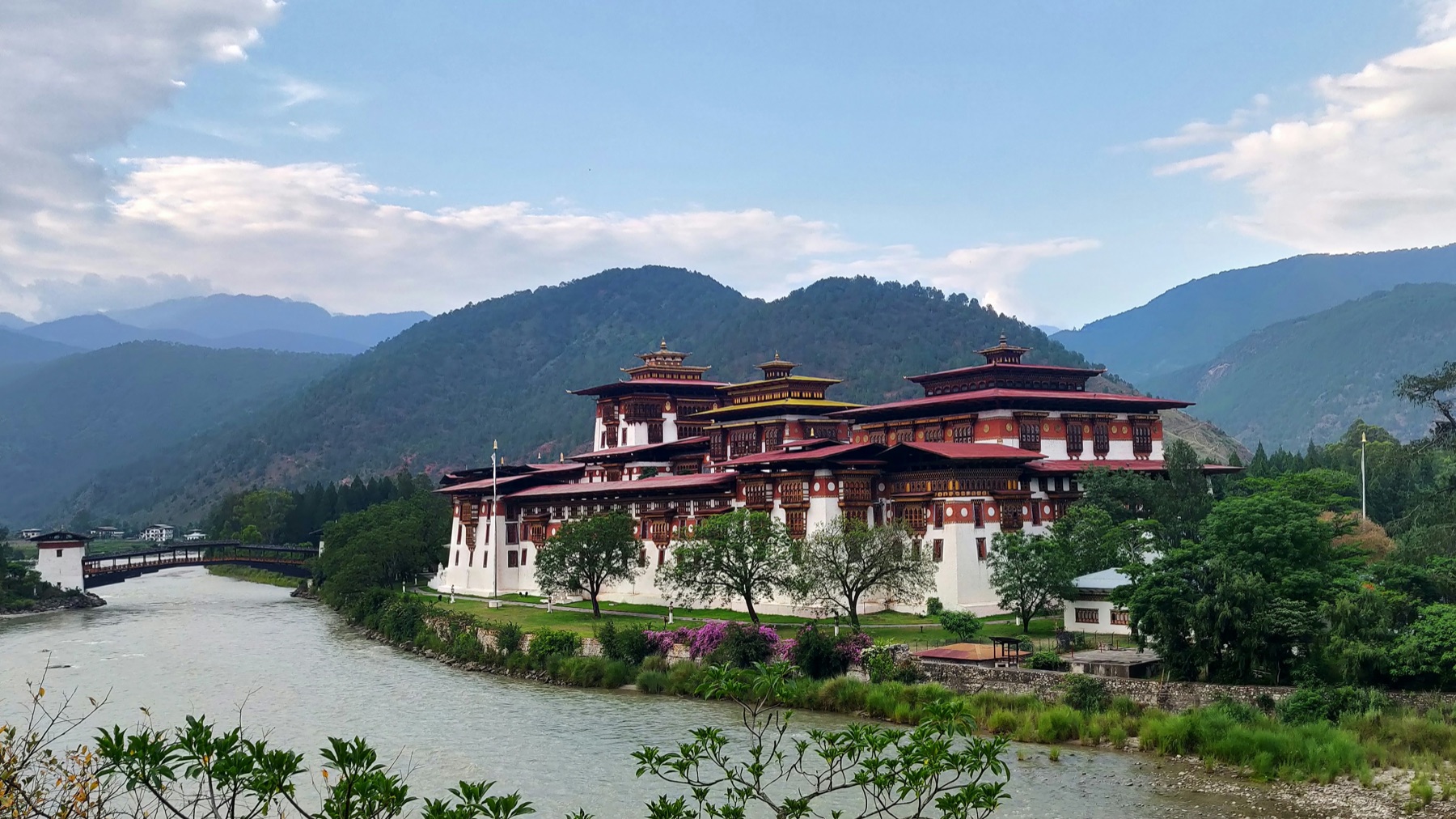
Tashichho Dzong
The whitewashed fortress that houses the throne room of the King and the office of the Je Khenpo, Bhutan's chief abbot.
Buddha Dordenma
A massive gilded statue on a hilltop south of the city, containing over 100,000 smaller Buddha statues inside.
Memorial Chorten
A whitewashed stupa built in memory of the third King, and one of the most visible acts of daily worship in the city.
Centenary Farmers Market
A riverside market where farmers from every district sell produce, cheese, incense, and dried chillies each weekend.
Motithang Takin Preserve
Home to the takin, Bhutan's unusual national animal, in a forested enclosure just above the city.
A temperate valley climate with four distinct seasons. Summers (June–August) are warm and green with monsoon rain most afternoons, 15–25°C. Winters (December–February) are cold and dry, dropping near freezing at night with occasional light snow. Spring and autumn are mild, dry, and clear — the most comfortable months to explore on foot.
Send us an enquiry — free itinerary customization.